
We Built an SEO Audit Tool. Then Our Own Site Failed the Exact Thing It Checks For.
We were sure backlinks were the problem. Search Console said otherwise. Here's what we actually found when we audited ourselves.
3 min read
A few weeks after launch, we hit zero. No signups, barely any traffic, and we'd just finished a batch of backlink work we expected to move the needle. It didn't.
The easy story to tell ourselves was "SEO just takes months, be patient." That's true, generally. But we build an audit tool for a living, so instead of waiting, we did what we tell everyone else to do: we stopped guessing and pulled the actual data.
The first surprise: it wasn't a ranking problem
We opened Search Console expecting to see low positions on real keywords. What we saw instead was almost nothing — total impressions in the single digits most days, and the few search terms that did show up were misspellings of our own brand name. Not one category keyword. Not one real search intent.
That's not a ranking problem. That's a "Google barely knows this site exists" problem. Two very different diagnoses, two very different fixes — and we'd have wasted weeks writing content optimized for the wrong one if we hadn't checked first.
The second surprise: our own sitemap was quietly incomplete
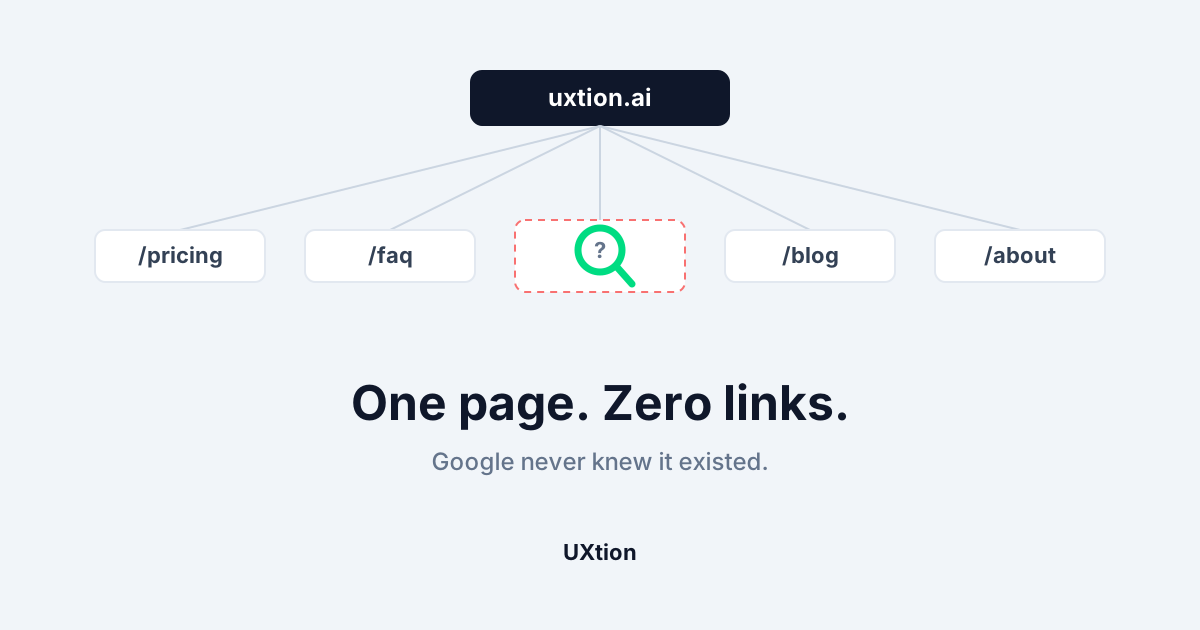
We went looking for why. Our sitemap — the file that's supposed to tell Google every page worth knowing about — only listed a fraction of our live pages. A page we'd built specifically to convert visitors wasn't even in Google's known universe of our own site. Not blocked, not penalized — just never told about.
It's an easy thing to miss because nothing breaks. The page loads fine. Visitors who already have the link can see it. The gap only shows up when you go looking for it from Google's side, not yours.
The third surprise: a page we'd forgotten we still had
While we were in there, we found something else — an old signup page from an earlier version of the product, still live, still working, with zero links pointing to it anywhere in our own site. Nobody used it on purpose. But if someone had stumbled onto it directly, it would have quietly created an incomplete account through a different path than our real signup flow — active, unused, and one accidental click away from confusing a real visitor.
We hadn't broken anything. We'd just stopped watching a corner of the house we built a while ago.
Why we're telling you this
None of these were dramatic bugs. No outage, no error message, nothing a customer would have reported. That's exactly the point — the things that quietly cap your traffic and confuse your visitors almost never announce themselves. You find them by checking, not by waiting for something to look broken.
We build tools for exactly this reason, and we still needed to run the check on ourselves before we saw it. If it happened to us mid-build, it's very likely sitting somewhere on your site right now too.
The fix, in our case, took an afternoon once we knew what to look for. That's usually the actual ratio: hours to fix, and however long it takes before someone finally looks.
See what's actually happening on your site → run a free check
This is the first in an occasional series where we write about what we find building UXtion — including the parts that don't make for a polished launch story.